
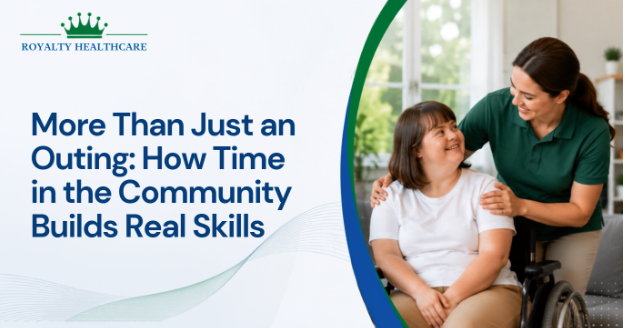

A trip to the local library, a Saturday morning at the footy club or a weekly cooking class might look like simple outings. For many people living with disability, they are much more than that. Every time someone orders their own coffee, catches the bus to a class or joins a conversation with new people, they are practising skills that make everyday life more independent.
That is why community participation and life skills support work so well together. Time out in the community gives people the chance to build friendships and enjoy their interests, while also learning and practising the skills they need at home, at work and around their neighbourhood.
This guide explains how community participation supports work under the NDIS, the skills participants commonly build along the way, ideas for getting involved around Brisbane and what to ask when choosing a provider.
Why Getting Out Matters So Much
Feeling connected to other people is one of the strongest foundations for wellbeing. Yet many people with disability experience isolation, whether because of transport barriers, a lack of confidence, limited social networks or simply not knowing where to start.
Community participation support helps break down those barriers. A support worker might help a participant find activities that match their interests, travel there safely, settle into a new group and build friendships over time. As confidence grows, the support can change, with the goal of the participant doing more on their own.
For families exploring NDIS Community Participation Supports Brisbane providers offer, it helps to know that good support is not just about filling the calendar. It should reflect what the participant enjoys, what they want to achieve and the kind of life they want to build, whether that means joining a sports team, volunteering, studying or simply having somewhere to go each week.
How Participation and Skill-Building Work Together
Under the NDIS, community activities can be funded in different ways depending on the purpose of the support.
Core supports include assistance with social, economic and community participation. This funds a support worker to help a participant take part in activities, such as attending a class, going to a social group or getting out to the shops. Capacity building supports include increased social and community participation, which focuses on developing the skills a participant needs to take part more independently. Improved daily living, another capacity building category, can fund training and assessments that build everyday living skills.
In practice, the two often overlap. A participant who goes to a weekly art class with a support worker is participating in the community, but they may also be learning to plan the trip, manage money for materials and talk with other class members. When the support is planned with skill-building in mind, every outing becomes an opportunity to grow.
That is where NDIS Life Skills Supports Brisbane participants receive can make a real difference. Skills taught at home, such as budgeting or planning a route, become far more meaningful when practised in real places, at real shops and on real public transport.
It is also worth knowing that NDIS funding usually covers the support, not the everyday cost of the activity itself. Entry fees, memberships, meals and tickets are generally paid by the participant, just as they would be for anyone else.
Eight Skills Participants Build Out in the Community
Community activities create natural opportunities to practise skills that carry over into everyday life. These are some of the most common.
- Travel and getting around. Planning a route, reading timetables, tapping on and off public transport and knowing what to do if a bus is late are skills that open up the whole city. Practising on familiar routes first, then gradually expanding, helps participants travel with confidence.
- Money management. Paying for a coffee, checking change, sticking to a weekly spending limit and saving for a special event all build budgeting skills in a practical way. Real transactions are often easier to learn than practice exercises at home.
- Communication and conversation. Ordering food, asking for help, introducing yourself and joining a group discussion help participants build confidence in communicating with people outside their usual circle.
- Social skills and friendships. Taking turns, sharing interests, reading social cues and keeping in touch with new friends develop gradually through regular contact with the same group. Over time, these connections can become an important part of a participant’s support network.
- Planning and time management. Remembering the day and time of an activity, getting ready on time and organising what to bring help participants manage their own schedule. Phone reminders, calendars and visual planners can support this.
- Safety awareness. Crossing roads safely, knowing what to do if lost, recognising unsafe situations and keeping personal belongings secure are important skills for independence. They are best learned in real settings with a supportive worker nearby.
- Decision-making and choice. Choosing which activities to try, what to order or how to spend free time helps participants practise making decisions and expressing preferences, which is central to having choice and control.
- Confidence and self-advocacy. Each successful outing builds confidence. Over time, participants become more comfortable speaking up for themselves, asking for what they need and trying new things.
Progress in these areas should be recorded and reviewed regularly, so participants and families can see what has changed and plan the next steps.
Ideas for Getting Involved Around Brisbane
Brisbane offers a wide range of places to connect, learn and enjoy shared interests. Local libraries run book clubs, technology help sessions and community events. Parks and public spaces such as South Bank and the City Botanic Gardens are popular for walks and picnics. Community gardens, Men’s Sheds, sporting clubs, art studios, choirs and TAFE short courses can all provide regular, structured activities with a welcoming social group.
Volunteering is another valuable option. Helping at a community event, animal shelter or op shop gives participants a sense of purpose and can build work-related skills such as following instructions, teamwork and punctuality.
The best choice depends on the person. Life Skill Development Brisbane participants enjoy works best when it is built around their genuine interests and practised in their own neighbourhood, whether that is Strathpine, Chermside, North Lakes or further afield. A participant who loves animals, music or sport is far more likely to stay engaged with an activity that reflects that passion.
Questions to Ask Before Choosing a Provider
The right provider can make community participation enjoyable, safe and meaningful. These questions help you understand what to expect.
- How will you get to know my interests and goals? A good provider will spend time understanding what the participant enjoys, what they find difficult and what they want to achieve, rather than offering a fixed list of activities.
- Do you offer one-to-one and group options? Some participants thrive in groups, while others prefer individual support, at least to begin with. Flexibility allows support to match the person.
- How will skill-building be included? Ask how the provider plans to build independence over time, such as gradually reducing support for travel or encouraging the participant to handle purchases themselves.
- Will I have consistent support workers? Working with the same small team builds trust and makes it easier for participants to settle into new activities. Ask how workers are matched to participants.
- How will progress be tracked and shared? Regular updates and progress notes help families stay informed and provide useful evidence for plan reviews.
- Are you a registered NDIS provider? Registered providers are listed on the NDIS Quality and Safeguards Commission’s public provider register, and workers in risk-assessed roles must hold a current NDIS Worker Screening Check. Asking about both helps you choose with confidence.
How Royalty Healthcare Can Help
Royalty Healthcare (ABN 35 654 251 519) is a registered NDIS provider based at Strathpine, supporting participants across Brisbane, Ipswich, Logan, the Gold Coast and the Sunshine Coast.
Our community participation support includes social outings and events, sports and fitness programs, group learning workshops, creative classes and hobbies, and community volunteering, with one-to-one or group options on weekdays or weekends. Our life skills support covers communication, budgeting, cooking, travel training and self-care. We start by understanding each participant’s goals, plan personalised activities, support them to take part and review the plan regularly so support keeps pace with their progress.
We work with self-managed, plan-managed and NDIA-managed participants. To talk about your goals, call 1800 467 692 or email info@royaltyhealthcare.com.au.
Final Thoughts
Community participation is about far more than keeping busy. It is a chance to build friendships, enjoy interests and practise the everyday skills that lead to greater independence. When support is built around the participant’s goals, combines participation with skill-building and is reviewed regularly, every outing becomes a step forward. Start with what the person loves, choose a provider who listens and celebrate progress along the way.
Disclaimer: This article provides general information about the NDIS and is not personal, legal or financial advice. NDIS rules and funding arrangements can change, so check current information at ndis.gov.au or speak with the NDIA about your individual plan.